As the largest commuter center in the United States pre-pandemic, New york city City when swelled by upwards of one million people traveling to and from their workplaces each day, according to a 2013 Census estimate.
Now a year after COVID-19 required the companies big and little to shift to remote operations, a survey shows most of those million-plus employees is still homebound. Much of the loss in foot traffic is likely irreversible, leaving the service market and other organizations dependent on in-person engagement in a precarious area.
” It’s really clear that large companies are not in a rush to revive their employees. Workers are going to keep working remote through September and perhaps into 2022,” stated Jessica Walker, president and CEO of the Manhattan Chamber of Commerce, told Newsweek
The return-to-office survey carried out by Collaboration for New York City, an organization representing the city’s significant business companies, found that to date, only 10 percent of business employees in Manhattan are back in the workplace. Less than half are anticipated to go back to their pre-pandemic commutes, and 14 percent of companies surveyed reported they aren’t particular when most workers will return.
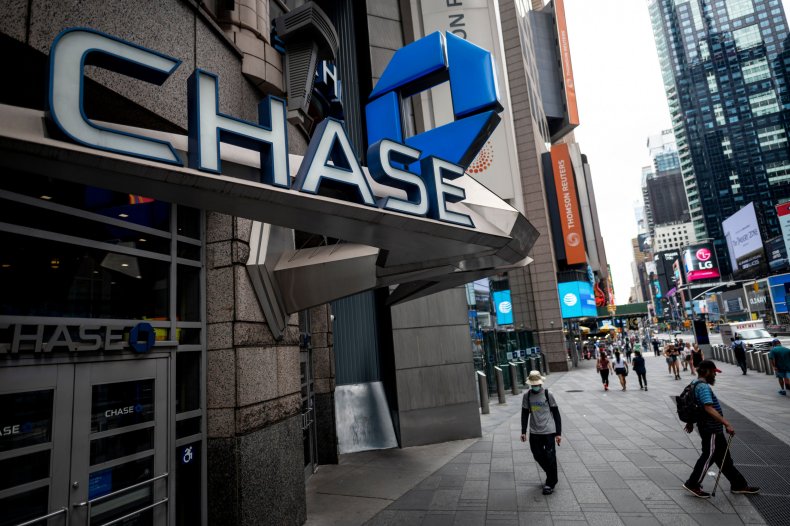
JPMorgan Chase & Co., the largest business in New york city City with more than 20,000 office workers, did not reveal just how much of their labor force is back in the workplace or the number of will stay remote. However the business informed Newsweek it would restore its teams in some capacity. Co-president Daniel Pinto said to CNBC in February that a rotational design in which employees come in on specific days is the future of the post-COVID workplace.
” Returning to the office with 100 percent of the people 100 percent of the time, I believe there is absolutely no chance of that. When it comes to everybody working from home all the time, there is also absolutely no opportunity of that,” Pinto stated. “The rotational design is the only thing that actually makes sense … and it can’t be recommended from the top because if you think of a business the size of JPMorgan, there are many functions that our 260,000 people perform, they’re all reasonably different.”
Pfizer, the fourth-largest company in the city, also forecasts its staff members will just return part-time as soon as all COVID restrictions are lifted. The company– a manufacturer of one of the vaccines expected to make it possible for a return to in-person operations– informed Newsweek it also acknowledges the increased versatility of working from another location, specifically for parents.
Pfizer’s new work model, “Log in for Your Day,” enables staff members to link from another location while working together.
” This new versatile working design will use coworkers the opportunity to work from another location two or three days a week, after all relevant COVID-19 restrictions have actually been raised. The capability to work flexibly will depend upon the nature of one’s job,” the business said in a statement. “Offering staff members greater versatility is something Pfizer is fully accepting as it has lots of benefits: less time travelling and greater work-life balance– supporting health and health and driving engagement and productivity. As an outcome, we do anticipate less associates pertaining to our offices daily.”
Considering that the start of the pandemic, the Manhattan Chamber of Commerce estimates around 38 percent of the city’s companies throughout the five districts have actually closed. While Walker anticipates that a few of that percentage is momentary closure up until constraints are lifted, the majority of is permanent.
Johannes Eisele/AFP by means of Getty Images
The forces of quarantine and remote work have actually culminated into a sharp $2.5 billion decline in tax profits, New York City Mayor Expense de Blasio revealed at a January press conference.
Information collected by both Partnership for New York City and the Manhattan Chamber of Commerce likewise reveal incremental signs of development: city usage continues to increase, while work in food service and the arts, entertainment and entertainment has gone up by 6 percent and 5 percent, respectively.
Walker stated the Manhattan Chamber of Commerce is also presenting initiatives to motivate workers to return to the city, such as a collaboration with WeWork to use discount rates for local services.
” I do believe the inclination towards remote work will have lasting impacts. The value proposition of being in New york city has to be enhanced once again, we can’t be overconfident and go, ‘Well, we’re New York,'” she stated. “We need to be thoughtful about that due to the fact that we do want to restore employees who can work from anywhere.”


No comments:
Post a Comment